


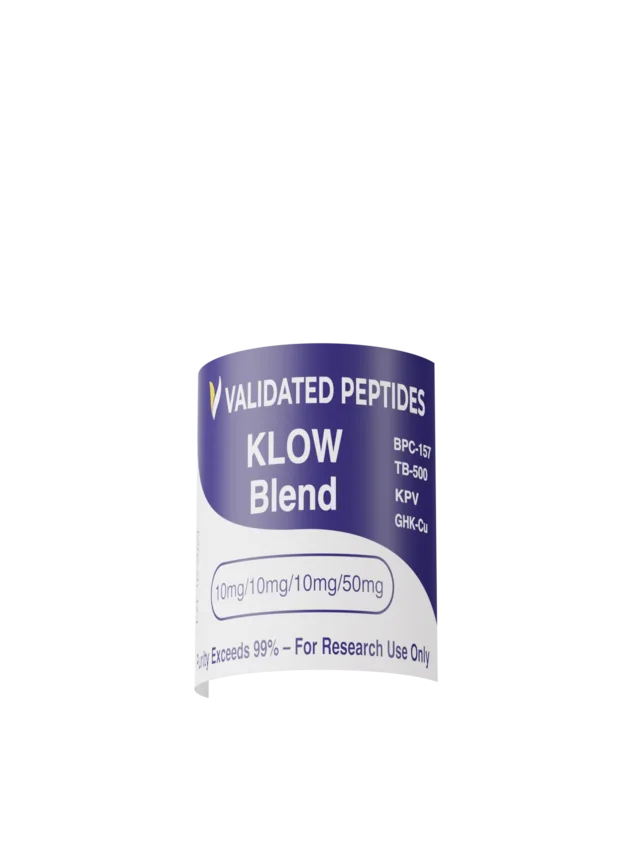

The Klow Blend pairs four peptides with different research focuses: KPV, which targets inflammatory signaling through NF-kappaB in gut and immune cells; BPC-157, which interacts with growth factor receptors and nitric oxide pathways; GHK-Cu, which influences gene expression related to collagen and tissue structure; and TB-500, which binds actin and is studied for its role in cell movement and blood vessel formation. Researchers use this combination to study whether these distinct mechanisms produce coordinated effects in inflammation and extracellular matrix models.
Structured specifications and handling data
Technical specifications
KPV + BPC-157 + GHK-Cu + TB-500Compounds commonly studied alongside this one.
This blend combines four peptides that each approach cellular biology from a different direction. KPV is a tiny alpha-MSH fragment that has been studied for its ability to reduce NF-kappaB activation, the master switch for inflammatory gene expression, in intestinal and immune cells. BPC-157 is a gastric peptide fragment associated with growth factor receptor signaling, nitric oxide pathways, and blood vessel formation. GHK-Cu is a copper-peptide complex that influences the expression of thousands of genes tied to collagen production and tissue remodeling. TB-500 is a synthetic thymosin beta-4 fragment that binds actin and has been studied for its role in how cells reorganize their internal structure and migrate.
The rationale for combining them is that inflammatory signaling, growth factor pathways, structural protein production, and cytoskeletal dynamics are interconnected biological systems. KPV may modulate the inflammatory environment, BPC-157 may influence growth factor and vascular signals, GHK-Cu may affect how cells build and maintain their surrounding matrix, and TB-500 may influence cell migration. Studying all four together lets researchers observe whether these overlapping pathways produce effects that differ from studying each peptide alone.
Each component has been characterized individually in published research. The combination approach is a newer area of investigation in multi-peptide signaling studies.
Concise answers about laboratory context, handling, and documentation for this compound.
Laboratory compliance notice
All compounds sold by Validated Peptides are intended for in-vitro laboratory research only.
These materials are not approved by the FDA for human or animal use and are not intended for diagnostic, therapeutic, or clinical applications.
Purchasers are responsible for compliant handling, storage, and use within an appropriate laboratory environment.


