Third-party tested
Purity documentation available
Research supply chain
Compliance notice included
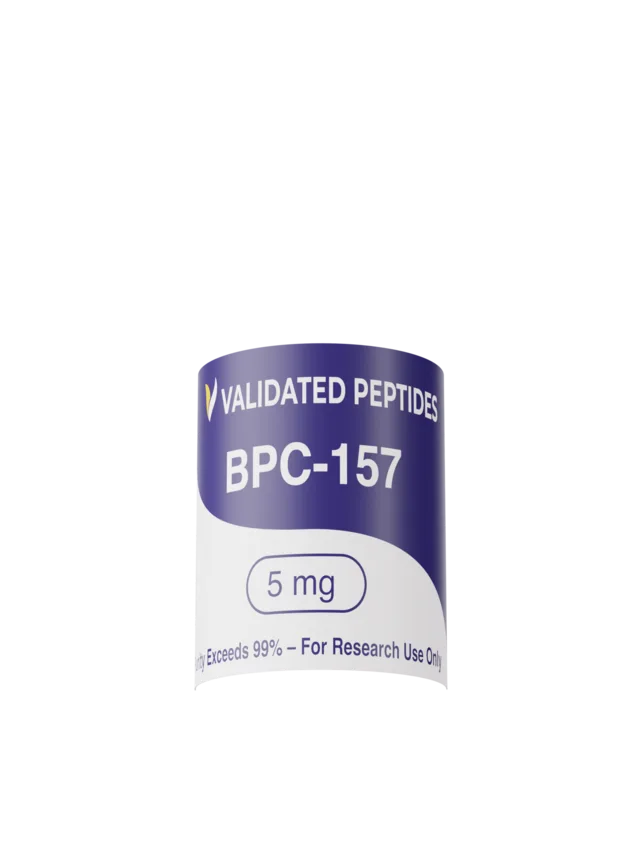
BPC-157
99%+ Purity

BPC-157 Peptide

BPC-157 is a 15-amino acid pentadecapeptide derived from a protective gastric protein found in human gastric juice. Research demonstrates BPC-157 accelerates healing across multiple tissue types including tendons, ligaments, muscles, bones, and gastrointestinal tract. Animal studies show the peptide promotes angiogenesis through VEGFR2 activation and enhances tissue regeneration via the FAK-paxillin and nitric oxide signaling pathways. BPC-157 has demonstrated efficacy in repairing transected tendons and ligaments, healing muscle injuries, accelerating bone fracture recovery, and treating gastrointestinal ulcers and inflammatory bowel conditions. The peptide exhibits cytoprotective and anti-inflammatory properties while maintaining stability in gastric juice for over 24 hours. For Research Use Only. Not intended for human or veterinary use.

1
$29.99
We accept

Certificate of Analysis

Third Party TestedISO/IEC 17025 Accredited
ISO 170253rd Party
99.49%
Purity
Passed full QC panel
Lot #BPC157-10MG-BA-825
TestedAug 12, 2026
Full QC Panel
Purity (HPLC)99.49%
Net Peptide Content10.6mg
Identity (HPLC)BPC-157 Confirmed
Heavy Metals (ICP-MS)Not Detected
Sterility (PCR)No Growth
Endotoxin (USP <85>)NMT 0.05 EU/mL
ISO/IEC 17025 Accredited
ISO 170253rd Party
10.6mg
Net Peptide Content
Lot #BPC157-10MG-BA-825
TestedAug 12, 2026
ISO/IEC 17025 Accredited
ISO 170253rd Party
Pass
Endotoxin
Lot #BPC157-10MG-BA-825
TestedAug 12, 2026
Full QC Panel
Endotoxin (USP <85>)NMT 0.05 EU/mL
ISO/IEC 17025 Accredited
ISO 170253rd Party
Pass
Heavy Metals
Lot #BPC157-10MG-BA-825
TestedAug 12, 2026
Full QC Panel
Heavy Metals (ICP-MS)Not Detected
ISO/IEC 17025 Accredited
ISO 170253rd Party
Pass
Microbial & Sterility
Lot #BPC157-10MG-BA-825
TestedAug 12, 2026
Full QC Panel
Sterility (PCR)No Growth
ISO/IEC 17025 Accredited
ISO 170253rd Party
Pass
Identity
Lot #BPC157-10MG-BA-825
TestedAug 12, 2026
Full QC Panel
Identity (HPLC)BPC-157 Confirmed
ISO/IEC 17025 Accredited
ISO 170253rd Party
Pass
Fentanyl Screen
Lot #BPC157-10MG-BA-825
TestedAug 12, 2026
ISO/IEC 17025 Accredited
ISO 170253rd Party
99.49%
Purity
Passed full QC panel
Lot #BPC157-10MG-BA-825
TestedAug 12, 2026
Full QC Panel
Purity (HPLC)99.49%
Net Peptide Content10.6mg
Identity (HPLC)BPC-157 Confirmed
Heavy Metals (ICP-MS)Not Detected
Sterility (PCR)No Growth
Endotoxin (USP <85>)NMT 0.05 EU/mL
ISO/IEC 17025 Accredited
ISO 170253rd Party
10.6mg
Net Peptide Content
Lot #BPC157-10MG-BA-825
TestedAug 12, 2026
ISO/IEC 17025 Accredited
ISO 170253rd Party
Pass
Endotoxin
Lot #BPC157-10MG-BA-825
TestedAug 12, 2026
Full QC Panel
Endotoxin (USP <85>)NMT 0.05 EU/mL
ISO/IEC 17025 Accredited
ISO 170253rd Party
Pass
Heavy Metals
Lot #BPC157-10MG-BA-825
TestedAug 12, 2026
Full QC Panel
Heavy Metals (ICP-MS)Not Detected
ISO/IEC 17025 Accredited
ISO 170253rd Party
Pass
Microbial & Sterility
Lot #BPC157-10MG-BA-825
TestedAug 12, 2026
Full QC Panel
Sterility (PCR)No Growth
ISO/IEC 17025 Accredited
ISO 170253rd Party
Pass
Identity
Lot #BPC157-10MG-BA-825
TestedAug 12, 2026
Full QC Panel
Identity (HPLC)BPC-157 Confirmed
ISO/IEC 17025 Accredited
ISO 170253rd Party
Pass
Fentanyl Screen
Lot #BPC157-10MG-BA-825
TestedAug 12, 2026
ISO/IEC 17025 Accredited

Compound Information

Structured specifications and handling data

Molecular profile

Technical specifications

Type:Synthetic Peptide
CAS Number:137525-51-0
Molecular Weight:1419.53 g/mol
Amino Acids:15
Sequence:Gly-Glu-Pro-Pro-Pro-Gly-Lys-Pro-Ala-Asp-Asp-Ala-Gly-Leu-Val
Formula:C62H98N16O22
PubChem Database
Storage requirements

Stability and handling

Room Temperature
Lyophilized
Light Sensitive
Storage TemperatureStore in a cool, dry place away from light; refrigerate at 2–8°C (36–46°F)
ReconstitutionSterile water or bacteriostatic water recommended
StabilityStable when stored properly; avoid repeated freeze-thaw cycles
Chemical structure

Molecular model

3D Interactive

Loading 3D Molecule...

Left click to rotate • Scroll to zoom

BPC-157 research overview

BPC-157 is modeled after a small fragment of a protective protein found naturally in gastric juice. Researchers noticed this fragment seemed to trigger interesting cellular responses on its own, and that observation kicked off decades of laboratory study. In cell culture experiments, BPC-157 appears to affect fibroblasts (the cells responsible for building connective tissue) and endothelial cells (the ones that line blood vessels), influencing how they move and multiply.

There is also research suggesting it interacts with nitric oxide pathways, which are the signaling systems cells use to control blood vessel behavior, and with growth factors like VEGF that play a role in forming new blood vessels. These interactions have made it a frequent subject in angiogenesis research, which is the study of how new blood vessel networks develop.

Animal studies have explored BPC-157 in the context of how cells organize the extracellular matrix, the structural scaffolding that exists between cells. Researchers have also looked at its connection to the stomach's natural protective mechanisms and inflammatory signaling molecules called cytokines. With over 200 published papers, it remains one of the more widely studied peptides in preclinical research. For Research Use Only. Not intended for human or veterinary use.

Angiogenic Signaling

Has been studied in models investigating blood vessel formation pathways and endothelial cell behavior in laboratory settings.

Extracellular Matrix Interactions

Research has explored its effects on collagen organization and fibroblast activity in experimental wound models.

Growth Factor Pathways

Has been investigated for interactions with VEGF and FGF receptor signaling in cell culture studies.

Nitric Oxide System

Animal studies have examined its potential modulation of nitric oxide synthase activity in tissue injury models.

Research evidence

Published studies and concise summaries for research review.

Research Paper
Lorem ipsum dolor sit amet, consectetur adipiscing elit. Sed do eiusmod tempor incididunt ut labore et dolore magna aliqua.
Ut enim ad minim veniam, quis nostrud exercitation ullamco laboris nisi ut aliquip ex ea commodo consequat.
Stable Gastric Pentadecapeptide BPC 157 and Wound Healing
Seiwerth S, et al.
Research Paper
Lorem ipsum dolor sit amet, consectetur adipiscing elit. Sed do eiusmod tempor incididunt ut labore et dolore magna aliqua.
Ut enim ad minim veniam, quis nostrud exercitation ullamco laboris nisi ut aliquip ex ea commodo consequat.

AI-generated summary of this research paper below.

This review synthesizes BPC 157's effects on various wound types, including incisional/excisional skin wounds, deep burns, diabetic ulcers, and alkali burns in rodent models. BPC 157 (topical or systemic) consistently accelerated healing by reducing edema, inflammation, necrosis, and thrombosis while promoting angiogenesis, collagen deposition, re-epithelialization, and tensile strength. It counteracted complications like vessel occlusion and preserved tissue viability, even in challenging conditions (e.g., diabetes or burns covering large areas). The peptide's cytoprotective and angiomodulatory actions position it as a promising agent for diverse wound healing applications with an excellent safety profile.
Research overview
Total Papers
200+
Year Range
1992+
Research status
Active
Peer-reviewed studies available
Research FAQ

Frequently asked questions

Concise answers about laboratory context, handling, and documentation for this compound.

Laboratory compliance notice

All compounds sold by Validated Peptides are intended for in-vitro laboratory research only.

These materials are not approved by the FDA for human or animal use and are not intended for diagnostic, therapeutic, or clinical applications.

Purchasers are responsible for compliant handling, storage, and use within an appropriate laboratory environment.

Research Use Only
Not for Human Use
21+ Required