


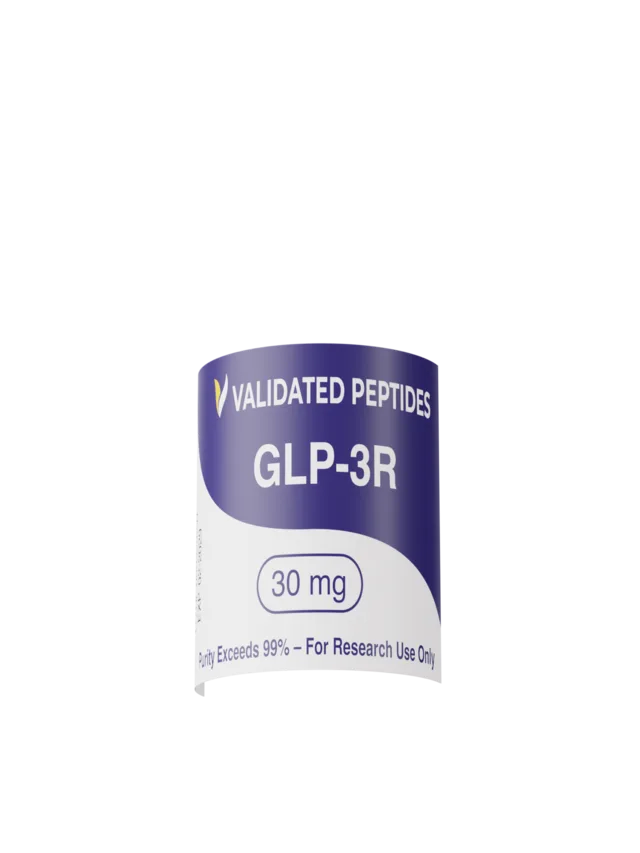

GLP-3R is a 39 amino acid synthetic peptide engineered to activate three different receptors involved in metabolism: the GIP receptor, the GLP-1 receptor, and the glucagon receptor. That triple-receptor approach sets it apart from peptides that target just one or two of those systems. Researchers use it to explore what happens when all three pathways are switched on together, particularly in models studying energy balance, nutrient processing, and liver fat content.
Structured specifications and handling data
Technical specifications
YA¹QGTFTSDYSIL²LDKK⁴AQA¹AFIEYLLEGGPSSGAPPPS³ (where A¹=Aib, L²=α-methyl-L-leucine, K⁴=lysine with (AEEA)-(γ-Glu)-(C20 diacid) side chain, S³=serinamide; full one-letter sequence with modifications refer to structural diagrams in primary literature)C221H342N46O68Stability and handling
Molecular model
Loading 3D Molecule...
Compounds commonly studied alongside this one.

Related research:
GLP-3R is designed to hit three receptors that play important roles in how the body processes nutrients. Two of them, GIP and GLP-1, belong to the incretin system, a group of gut hormones that help coordinate insulin release after eating. The third, the glucagon receptor, is involved in how the liver manages stored energy. By activating all three at once, GLP-3R gives researchers a way to study what happens when these overlapping systems are engaged simultaneously.
Like GLP-2T, GLP-3R has been modified with a fatty acid chain that lets it bind to albumin in the bloodstream, keeping it active longer in experimental models. In cell-based studies, researchers have measured how it triggers cyclic AMP production (a key intracellular signal) at each of the three receptor types. The activation profile is not equal across all three, which is itself an area of active research.
Animal studies have explored GLP-3R in models looking at energy expenditure, food intake, and liver fat content. Comparative research has examined how triple-receptor activation differs from dual or single-receptor activation, helping scientists piece together how these metabolic pathways interact with each other.
Published studies and concise summaries for research review.
AI-generated summary of this research paper below.
Concise answers about laboratory context, handling, and documentation for this compound.
Laboratory compliance notice
All compounds sold by Validated Peptides are intended for in-vitro laboratory research only.
These materials are not approved by the FDA for human or animal use and are not intended for diagnostic, therapeutic, or clinical applications.
Purchasers are responsible for compliant handling, storage, and use within an appropriate laboratory environment.