Third-party tested
Purity documentation available
Research supply chain
Compliance notice included
TB-500
99%+ Purity

TB-500 Peptide

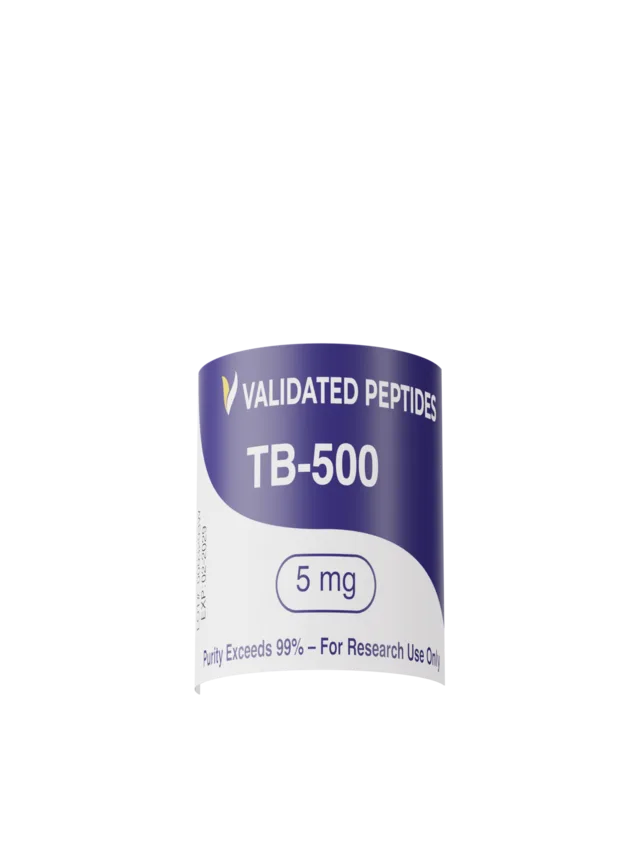
TB-500 is a 43 amino acid synthetic version of thymosin beta-4, a protein found naturally in nearly every mammalian cell. Its primary job in the body is binding actin, one of the main building blocks of a cell's internal skeleton. Researchers study TB-500 to understand how that actin-binding activity influences cell movement, blood vessel formation, and inflammatory signaling in cell culture and animal models. For Research Use Only. Not intended for human or veterinary use.

1
$39.99
We accept

Certificate of Analysis

Third Party TestedISO/IEC 17025 Accredited
ISO 170253rd Party
99.16%
Purity
Passed full QC panel
Lot #000329W
TestedJul 31, 2026
Full QC Panel
Purity (HPLC)99.16%
Net Peptide Content10.28mg
Identity (HPLC)TB-4 Confirmed
ISO/IEC 17025 Accredited
ISO 170253rd Party
Pass
Identity
Lot #000329W
TestedJul 31, 2026
Full QC Panel
Identity (HPLC)TB-4 Confirmed
ISO/IEC 17025 Accredited
ISO 170253rd Party
10.28mg
Net Peptide Content
Lot #000329W
TestedJul 31, 2026
ISO/IEC 17025 Accredited
ISO 170253rd Party
Pass
Fentanyl Screen
Lot #000329W
TestedJul 31, 2026
ISO/IEC 17025 Accredited
ISO 170253rd Party
99.16%
Purity
Passed full QC panel
Lot #000329W
TestedJul 31, 2026
Full QC Panel
Purity (HPLC)99.16%
Net Peptide Content10.28mg
Identity (HPLC)TB-4 Confirmed
ISO/IEC 17025 Accredited
ISO 170253rd Party
Pass
Identity
Lot #000329W
TestedJul 31, 2026
Full QC Panel
Identity (HPLC)TB-4 Confirmed
ISO/IEC 17025 Accredited
ISO 170253rd Party
10.28mg
Net Peptide Content
Lot #000329W
TestedJul 31, 2026
ISO/IEC 17025 Accredited
ISO 170253rd Party
Pass
Fentanyl Screen
Lot #000329W
TestedJul 31, 2026
ISO/IEC 17025 Accredited

Compound Information

Structured specifications and handling data

Molecular profile

Technical specifications

Type:Synthetic Peptide
CAS Number:77591-33-4
Molecular Weight:4963.44 g/mol
Amino Acids:43
Sequence:Ac-Ser-Asp-Lys-Pro-Asp-Met-Ala-Glu-Ile-Glu-Lys-Phe-Asp-Lys-Ser-Lys-Leu-Lys-Lys-Thr-Glu-Thr-Gln-Glu-Lys-Asn-Pro-Leu-Pro-Ser-Lys-Glu-Thr-Ile-Glu-Gln-Glu-Lys-Gln-Ala-Gly-Glu-Ser
Formula:C212H350N56O78S
PubChem Database
Storage requirements

Stability and handling

Lyophilized
Cold Storage
Storage TemperatureStore in a cool, dry place away from light; refrigerate at 2–8°C (36–46°F)
ReconstitutionReconstitute with sterile water or bacteriostatic water
StabilityStable when stored properly; avoid repeated freeze-thaw cycles
Chemical structure

Molecular model

3D Interactive

Loading 3D Molecule...

Left click to rotate • Scroll to zoom

TB-500 research overview

TB-500 is a synthetic copy of thymosin beta-4, a small protein your cells naturally produce in large quantities. Thymosin beta-4 binds to actin, which is one of the main structural proteins inside cells. By grabbing onto individual actin molecules, it helps control whether actin assembles into long filaments or stays as single units. That balance matters because actin filaments are what allow cells to change shape, move, and divide.

In laboratory experiments, researchers have watched TB-500 influence how fibroblasts, skin cells, and blood vessel cells reorganize and migrate. It has also been associated with increased levels of VEGF (vascular endothelial growth factor), a signaling protein that tells the body to build new blood vessels. This connection to blood vessel formation is one of the main reasons researchers find it interesting.

Beyond cell movement and blood vessel research, scientists have also explored how TB-500 interacts with inflammatory signaling molecules like interleukin-6 and TNF-alpha in immune cell experiments. There is also ongoing research into how it affects the way cells grip and attach to surfaces around them, a process that involves proteins called integrins and focal adhesion kinase. For Research Use Only. Not intended for human or veterinary use.

Actin Binding Activity

Has been studied in cell culture for its interactions with G-actin and effects on cytoskeletal organization.

Cellular Motility Research

Laboratory models have explored its association with cell migration patterns in scratch and transwell assays.

Angiogenic Models

Research has investigated its effects on endothelial cell behavior and tube formation in experimental systems.

Research evidence

Published studies and concise summaries for research review.

Research Paper
Lorem ipsum dolor sit amet, consectetur adipiscing elit. Sed do eiusmod tempor incididunt ut labore et dolore magna aliqua.
Ut enim ad minim veniam, quis nostrud exercitation ullamco laboris nisi ut aliquip ex ea commodo consequat.
Thymosin β4: a multi-functional regenerative peptide. Basic properties and clinical applications
Goldstein AL, et al.
Research Paper
Lorem ipsum dolor sit amet, consectetur adipiscing elit. Sed do eiusmod tempor incididunt ut labore et dolore magna aliqua.
Ut enim ad minim veniam, quis nostrud exercitation ullamco laboris nisi ut aliquip ex ea commodo consequat.

AI-generated summary of this research paper below.

This comprehensive review details the basic properties and clinical potential of Thymosin β4 (Tβ4), a 43-amino-acid peptide involved in actin sequestration, angiogenesis, and tissue repair. The authors synthesize preclinical and early clinical data showing Tβ4's ability to promote cell migration, reduce inflammation, and accelerate wound healing in models of dermal, corneal, and cardiac injury. Key results include enhanced epithelialization and collagen deposition in wound models, with Phase II trials demonstrating safety and efficacy in patients with venous stasis ulcers, pressure ulcers, and epidermolysis bullosa, where Tβ4 treatment led to faster closure rates and reduced scarring without adverse effects. Overall, Tβ4's multi-functional roles position it as a promising therapeutic for regenerative medicine, with ongoing trials exploring its use in dry eye syndrome and myocardial infarction recovery.
Research overview
Total Papers
1,000+
Year Range
1981+
Research status
Active
Peer-reviewed studies available
Research FAQ

Frequently asked questions

Concise answers about laboratory context, handling, and documentation for this compound.

Laboratory compliance notice

All compounds sold by Validated Peptides are intended for in-vitro laboratory research only.

These materials are not approved by the FDA for human or animal use and are not intended for diagnostic, therapeutic, or clinical applications.

Purchasers are responsible for compliant handling, storage, and use within an appropriate laboratory environment.

Research Use Only
Not for Human Use
21+ Required