


No. Bacteriostatic water is labelled for storage at controlled room temperature, 20 to 25°C, and that does not change once the vial has been opened. BAC Water sits on a shelf, not in the fridge. What changes after the first puncture is the clock: an opened vial has a 28-day window unless the manufacturer states a different one.
This article covers what the label says, why cold storage does not extend that window, how long bacteriostatic water lasts unopened and opened, what heat, air and freezing do to it, and why a reconstituted peptide solution follows different rules from the water used to make it.
Introduction
Bacteriostatic water is one of the least scrutinized items in a peptide lab. It arrives with the compounds, gets used to dissolve them, and often ends up in the fridge next to them simply because that is where everything else lives. The question of whether it belongs there comes up constantly, and the answer is on the label.
Most of the confusion comes from mixing up two different things: the diluent itself, and the solution made with it. They have different storage conditions and different time limits, and keeping them apart makes the rest of this straightforward to follow.
The Short Answer: Room Temperature, Not the Fridge
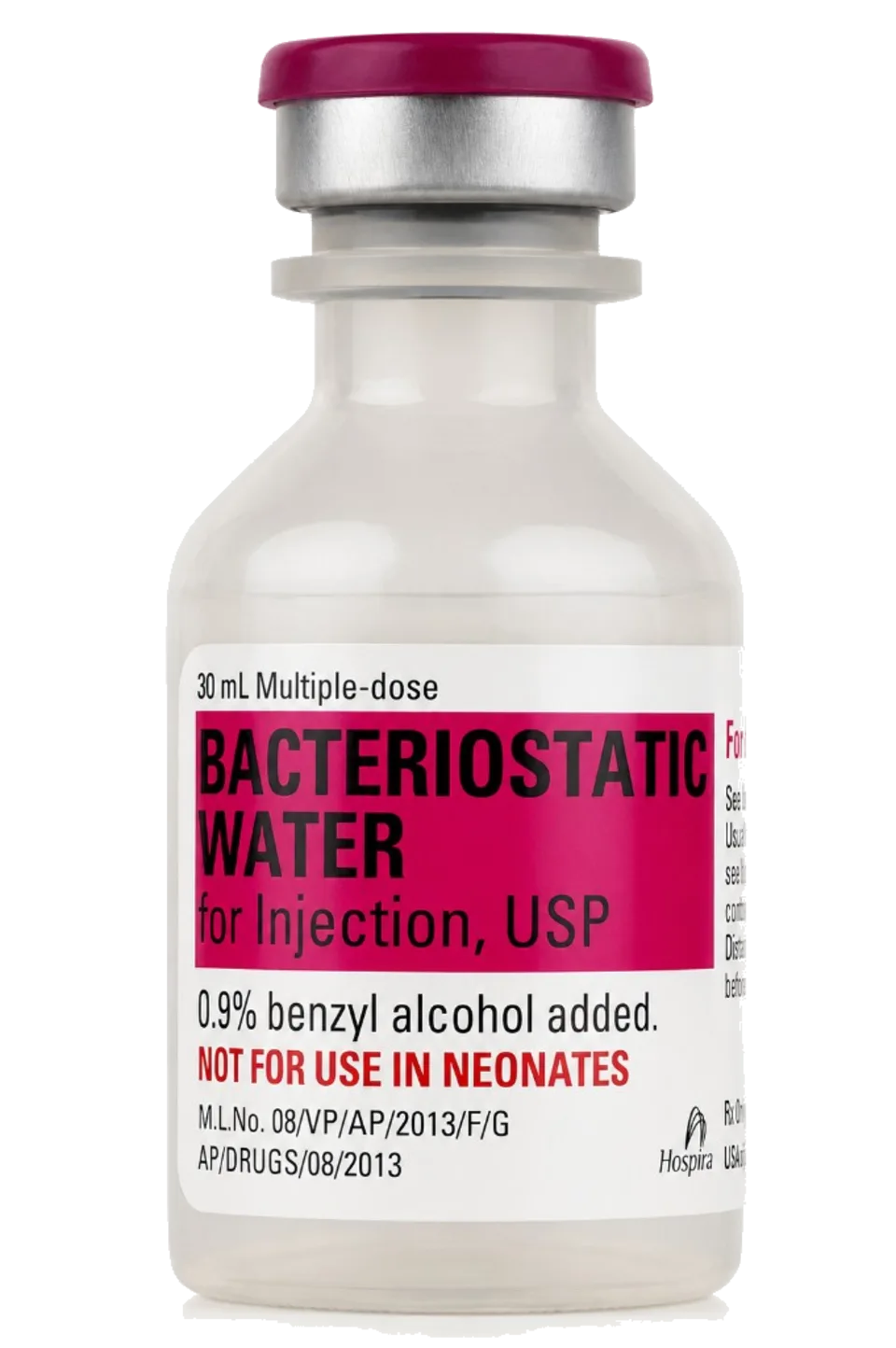
Bacteriostatic water does not need to be refrigerated, before or after opening. The manufacturer label for Hospira bacteriostatic water states a single storage condition, 20 to 25°C, and refers to USP controlled room temperature. There is no separate instruction for a vial once it has been punctured.
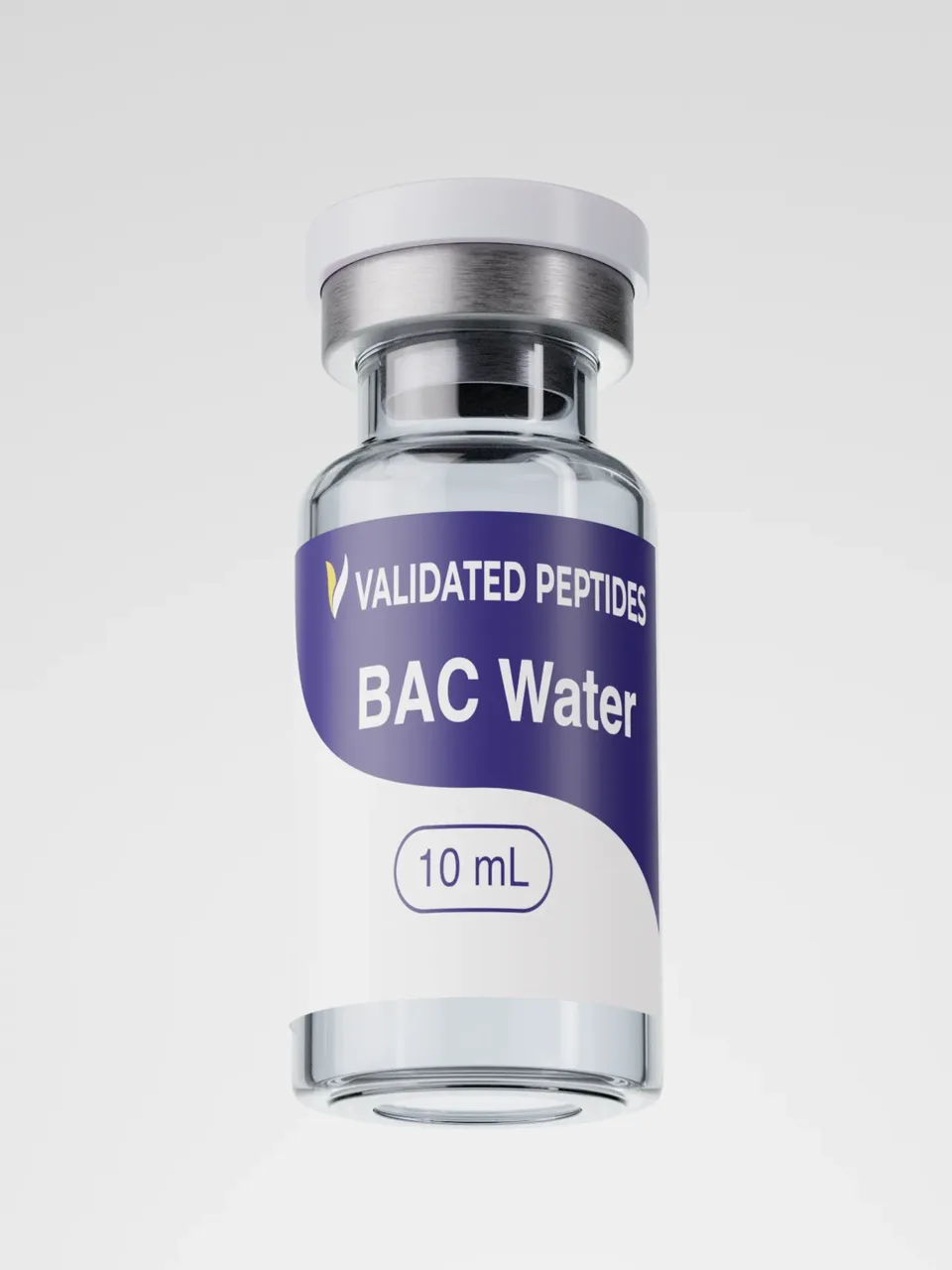
Validated Peptides lists the same condition for both of its bacteriostatic water products. The specifications for the BAC Water 10 mL and the Hospira BAC Water 30 mL both give storage as room temperature.
Keeping a vial in the fridge is not the instruction, and it does not buy extra time. The thing that limits the life of an opened vial is the number of days since it was first entered, not the temperature it sat at in between.
What the Label Actually Says
The Hospira label, published on DailyMed, describes the product as a sterile, nonpyrogenic preparation of water with benzyl alcohol added as a bacteriostatic preservative, supplied in a container from which repeated withdrawals may be made. The label lists two presentations:
| Presentation | Container | Benzyl alcohol | Storage |
|---|---|---|---|
| 30 mL fill | Plastic vial (polyolefin, a copolymer of ethylene and propylene) | 0.9% (9 mg/mL) | 20 to 25°C |
| 20 mL fill in a 30 mL vial | Glass vial | 1.1% (11 mg/mL) | 20 to 25°C |
Three other lines on the label matter for storage. The pH is given as 5.7, within a range of 4.5 to 7.0. The solution should not be used unless it is clear and the seal is intact. And reconstituted solutions should not be stored unless the manufacturer of the dissolved compound directs otherwise, which is the label drawing the same line between the diluent and the solution that this article does.
Every vial also carries a lot number and an expiry date. Those two fields are the starting point for everything that follows.
Why Refrigeration Does Not Extend the 28-Day Window
Benzyl alcohol is bacteriostatic, not bactericidal. It holds microbial growth in check rather than killing organisms outright, which is why a vial can be entered more than once but is not protected forever (Stroppel et al., 2023). Each puncture is a chance to introduce contamination, and the preservative is there to keep that manageable over a defined period.
That period is set by date, not by temperature. The guidance the CDC summarizes from USP General Chapter 797 is that an opened multi-use vial should be dated when first punctured and discarded within 28 days, unless the manufacturer states another date for that opened vial. The same guidance says the beyond-use date should never go past the manufacturer’s original expiry date.
Nothing in that guidance lengthens the window for cold storage. A vial opened on the first of the month reaches day 28 on the 29th whether it spent that time on a shelf or in a fridge. Temperature does affect how quickly microbes grow, which is one reason pharmacopeial guidance is tied to stated conditions, but the operating rule for an opened vial is the date written on it.
How Long Bacteriostatic Water Lasts
There are three different clocks, depending on what state the water is in:
| State | Time limit | Storage | Set by |
|---|---|---|---|
| Unopened vial | Until the printed expiry date | 20 to 25°C | Manufacturer label |
| Opened vial (first puncture) | 28 days from first entry, or the manufacturer’s stated date, never past expiry | 20 to 25°C | USP 797, as summarized by the CDC |
| Peptide reconstituted in it | Set by the compound documentation | Usually refrigerated, per the compound | The compound, not the water |
For an unopened vial, the expiry date on the label is the answer to how long bacteriostatic water is good for. There is no general figure that replaces it, because shelf life depends on the manufacturer, the container and the lot.
For an opened vial, the answer is 28 days from the first puncture. That is the reason to write the date on the vial the first time it is entered. Without it, there is no way to tell whether a vial is inside its window.
What Heat, Air and Freezing Do
The preservative is the part of bacteriostatic water that changes over time, and the conditions that change it are the reason the label sets a storage range at all.
Air
Benzyl alcohol slowly oxidizes to benzaldehyde and then to benzoic acid when exposed to air (Stroppel et al., 2023). A sealed vial keeps that to a minimum. Every puncture lets a little air in, which is one more reason the opened-vial window is finite.
Heat
Benzyl alcohol can also be lost into some plastic containers and is slowly taken up by certain rubber closures. In one study summarized in a 2023 review, benzyl alcohol loss in low-density polyethylene containers stored at 40°C for 90 days reached almost 80%, roughly ten times the loss in polypropylene containers under the same conditions (Stroppel et al., 2023). Those studies used other containers, not the Hospira vial, but the direction is clear: heat speeds up preservative loss. A vial left in a hot vehicle or next to equipment that runs warm is outside its labelled range.
Freezing
Freezing is not on the label either. The only stated condition is 20 to 25°C, and water expands as it freezes, which puts stress on the vial and its seal. There is no benefit to freezing a diluent that is already stable at room temperature.
The Diluent vs the Reconstituted Solution
Once a lyophilized peptide is dissolved in bacteriostatic water, the vial no longer holds bacteriostatic water. It holds a peptide solution, and its storage and time limit come from the compound, not the diluent.
There is a specific reason not to assume the water’s protection carries over. In a systematic study of a model peptide with three common preservatives, increasing the peptide concentration reduced the antimicrobial efficacy of all of them, benzyl alcohol included, in the pharmacopeial antimicrobial efficacy test (Heljo et al., 2015). The same benzyl alcohol is doing a harder job in a peptide solution than in plain water.
That is why reconstituted peptide vials are usually kept refrigerated while the bacteriostatic water stays on the shelf. The handling for peptide vials, from powder through reconstitution, is covered in the guide to storing peptide vials in the fridge.
Does Bacteriostatic Water Go Bad?
Yes. A vial should be discarded when any of the following is true:
- The printed expiry date has passed, whether or not the vial was ever opened.
- It has been 28 days since the first puncture, or the manufacturer’s stated date for an opened vial has passed.
- The date of first puncture is unknown.
- The solution is cloudy, discolored or contains visible particles.
- The seal is not intact.
- The vial has been frozen or stored somewhere hot, outside the labelled 20 to 25°C range.
Clarity is the one check that should happen every time a vial is used. Bacteriostatic water should be clear and colorless. The label instruction not to use it unless the solution is clear and the seal is intact applies regardless of the date.
Verification
A storage condition only means something if the contents of the vial match the label. For bacteriostatic water, the useful checks are identity of the preservative, endotoxin and a clean water analysis.
Validated Peptides publishes the current report for its BAC Water 10 mL on the product page and in the Certificate of Analysis library. The current lot:
| Lot | Tested | HPLC purity | Benzyl alcohol identity | Endotoxin (USP <85>) |
|---|---|---|---|---|
| 0003301W | August 12, 2026 | 99.88% | Confirmed by HPLC | 0.113 EU/mL |
The same lot also shows a pass on the water analysis and on a fentanyl screen. Testing is carried out by an independent laboratory accredited to ISO/IEC 17025. The Hospira BAC Water 30 mL carries the manufacturer’s own lot number and expiry date on the vial label.
The guide to reading a peptide COA explains what each line of a report means, and the same reading applies to a diluent.
A Storage Checklist for Bacteriostatic Water
For a lab keeping bacteriostatic water alongside peptide stock, the routine is short:
- Store unopened and opened vials at 20 to 25°C, away from heat and out of direct light.
- Check the expiry date when the vial arrives and file the lot number with the batch documentation.
- Write the date of first puncture on the vial.
- Discard at 28 days from first puncture, or at the manufacturer’s stated date, never past expiry.
- Inspect for clarity and an intact seal before every use.
- Store reconstituted peptide vials according to the compound documentation, separately from the diluent.
If the diluent is kept with the rest of a peptide set, the wide bay in the peptide vial storage box takes a vial up to 30 mL, so both the 10 mL and the Hospira 30 mL vials fit. The box itself can go on a shelf or in a fridge.
Where Bacteriostatic Water Fits in the Lab Workflow
Bacteriostatic water is the controlled solvent underneath an experiment, not the experiment itself. Its storage is simple: room temperature, a dated vial, a 28-day window once opened, and a clear solution every time. The care goes into the reconstituted peptide, which is where cold storage and compound documentation take over.
For more on what separates documented bacteriostatic water from an unlabelled vial, see what makes good bacteriostatic water. For the brand most labs ask for by name, see the guide to Hospira bacteriostatic water.
Frequently Asked Questions
Does BAC water need to be refrigerated?
No. Bacteriostatic water is labelled for storage at 20 to 25°C, controlled room temperature, both before and after the vial is opened. Refrigeration is not part of the label and does not extend the 28-day window for an opened vial. Reconstituted peptide solutions are different and follow the compound documentation.
How long is bacteriostatic water good for after opening?
An opened vial is dated at first puncture and discarded within 28 days, unless the manufacturer states another date for that opened vial. This guidance comes from USP General Chapter 797, as summarized by the CDC. The date should never run past the expiry printed on the vial.
How long does unopened bacteriostatic water last?
An unopened vial is good until the expiry date printed on its label, provided it has been stored at 20 to 25°C with the seal intact. Shelf life varies by manufacturer, container and lot, so the label date is the figure to use rather than a general estimate.
Does bacteriostatic water go bad?
Yes. It should be discarded after its expiry date, 28 days after first puncture, if the puncture date is unknown, if the solution is cloudy, discolored or has particles, if the seal is not intact, or if it has been frozen or stored somewhere hot.
Can bacteriostatic water be frozen?
Freezing is not a labelled storage condition. The Hospira label gives one range, 20 to 25°C. Water expands as it freezes, which stresses the vial and seal, and there is no benefit to freezing a diluent that is already stable at room temperature. A vial that has been frozen should be discarded.
Does refrigerating bacteriostatic water make it last longer?
No. The time limit for an opened vial is 28 days from first puncture, or the manufacturer’s stated date, regardless of where it was kept. An unopened vial is governed by its printed expiry date. Cold storage changes neither, and the label condition is room temperature.
References
- Hospira, Inc. Bacteriostatic Water for Injection, USP. Prescribing information and labels. DailyMed, U.S. National Library of Medicine, 2026. https://dailymed.nlm.nih.gov/dailymed/drugInfo.cfm?setid=87d6e9dc-fe3b-4593-ac9a-d7493d1959c7
- Centers for Disease Control and Prevention. Preventing Unsafe Injection Practices: multi-dose vials, citing United States Pharmacopeia General Chapter 797. https://www.cdc.gov/injection-safety/hcp/clinical-safety/
- Stroppel L, et al. Antimicrobial preservatives for protein and peptide formulations: an overview. Pharmaceutics, 2023;15(2):563. https://doi.org/10.3390/pharmaceutics15020563
- Heljo P, et al. Interactions between peptide and preservatives: effects on peptide self-interactions and antimicrobial efficiency in aqueous multi-dose formulations. Pharmaceutical Research, 2015;32(10):3201-3212. https://doi.org/10.1007/s11095-015-1697-z
- International Organization for Standardization / International Electrotechnical Commission. ISO/IEC 17025:2017, General requirements for the competence of testing and calibration laboratories. https://www.iso.org/standard/66912.html