


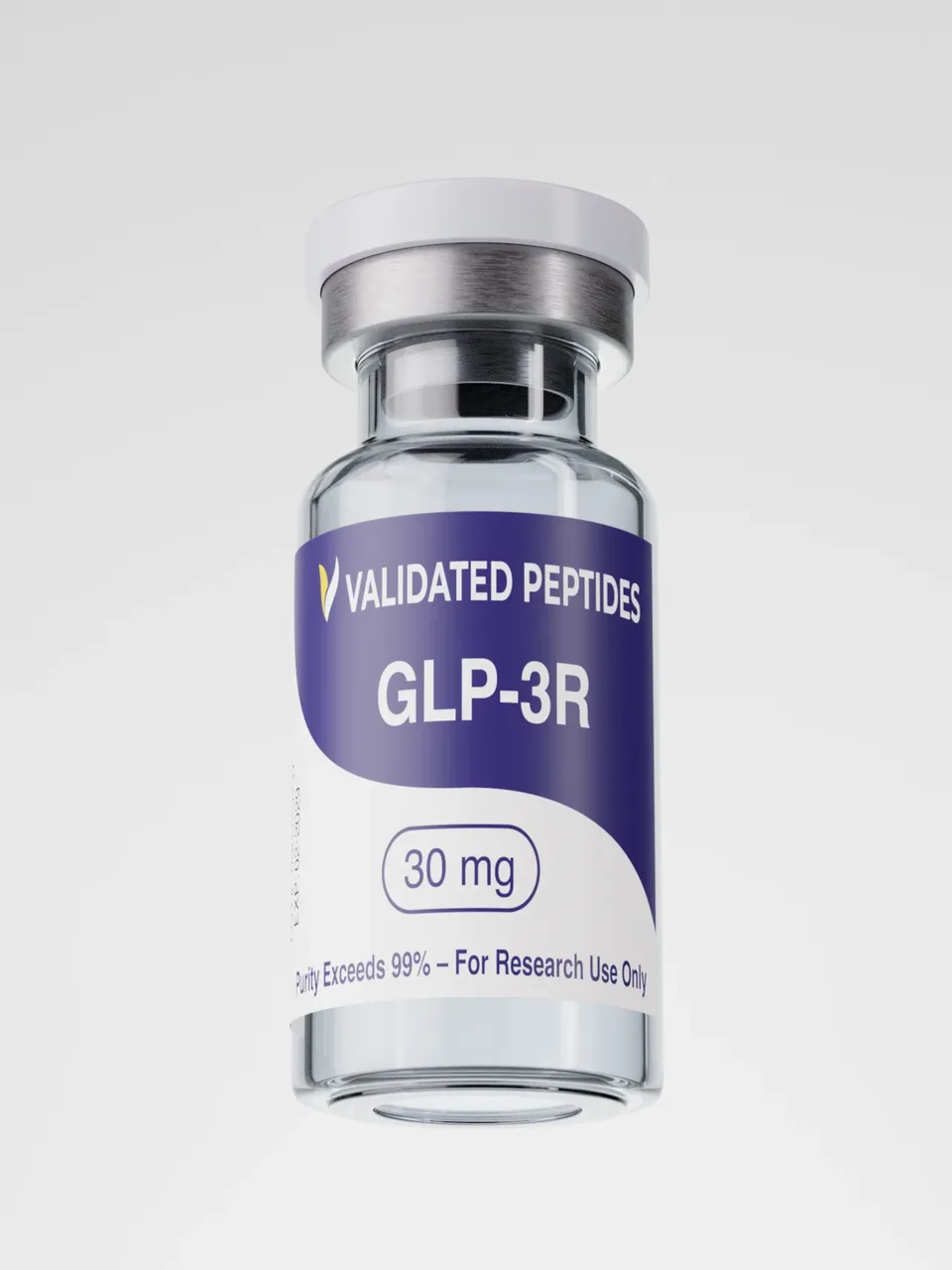
GLP-3Reta is a 39-amino-acid synthetic research peptide built to activate three receptors at once: the GIP receptor, the GLP-1 receptor and the glucagon receptor. Most buyers search for it by its short names, Reta and GLP-3, and those names cause most of the confusion around it.
This article explains where the names come from, what the three receptors are, what the molecule looks like, what research uses it for, and how a GLP-3Reta lot is documented.
Introduction
Metabolic signalling research has spent two decades working through the receptors that respond to gut and pancreatic hormones, one at a time and then in pairs. Triple agonists are the next step in that sequence: a single peptide engineered to engage three of those receptors together, so researchers can study how the pathways interact rather than how each behaves alone.
GLP-3Reta is the Validated Peptides compound in that class. This article stays with the compound itself and the preclinical research context around it, and holds to research-use framing throughout.
Where the Names Reta and GLP-3 Come From
GLP-3Reta is the product name. Reta is the short form most buyers type into a search bar, and GLP-3 is the shorthand for the category the compound belongs to. All three refer to the same molecule.
The “GLP” part comes from glucagon-like peptide. A single precursor protein, proglucagon, is processed into several related hormones: glucagon, glucagon-like peptide 1 (GLP-1), glucagon-like peptide 2 (GLP-2) and oxyntomodulin, each acting through its own receptor (Gasbjerg et al., 2026).
There is no natural hormone called GLP-3. The name works the way a product family name does. A peptide that activates the GLP-1 receptor is commonly called a GLP-1 compound, and a peptide built to act on three receptors at once picked up the label GLP-3 in the research peptide market as a quick way to say three receptors, not one. It describes the design, not a hormone.
That distinction matters when reading about the compound. Searching the biology literature for GLP-3 turns up nothing about a hormone, because there is not one. The research sits under triple agonists and under the three receptors by name.
The Three Receptors GLP-3Reta Is Built to Activate
A receptor is a protein on the surface of a cell that responds when the right molecule binds to it. GLP-3Reta is designed to bind and activate three of them.
The GLP-1 receptor
GLP-1 is a 30-amino-acid peptide hormone produced in specialised cells of the gut lining by processing proglucagon (Holst, 2007). It is classed as an incretin, a gut hormone released after a meal that acts on the pancreas, and its receptor is one of the most studied targets in metabolic research.
The GIP receptor
GIP, glucose-dependent insulinotropic polypeptide, was the first incretin hormone identified (Müller et al., 2025). It is the second member of the incretin system alongside GLP-1 and signals through its own receptor, the GIP receptor.
The glucagon receptor
Glucagon is also a proglucagon product. Its receptor is closely tied to the liver, where glucagon signalling is involved in how stored energy is released. It is the one receptor of the three that sits outside the incretin system, which is part of why combining it with the other two is of research interest.
Why a single molecule for three receptors
The idea of one peptide acting on all three receptors was set out in rodent research published in 2015, which described a monomeric peptide engineered as an agonist at the GLP-1, GIP and glucagon receptors without cross-reacting with related receptors (Finan et al., 2015). A triple agonist lets researchers compare what happens when the three pathways are engaged together against one or two of them alone.
In cell-based work, activation at each receptor is typically measured through cyclic AMP, a signalling molecule produced inside the cell when the receptor is switched on. A triple agonist does not have to act equally at all three receptors, and how strongly it acts at each is itself a research question.
What the GLP-3Reta Molecule Looks Like
The specifications Validated Peptides publishes for GLP-3Reta describe the molecule in detail:
| Property | GLP-3Reta |
|---|---|
| Type | Synthetic peptide, triple agonist |
| Length | 39 amino acids |
| Molecular weight | 4,731.33 g/mol |
| Molecular formula | C221H342N46O68 |
| CAS number | 2381089-83-2 |
| Non-standard residues | Aib (aminoisobutyric acid), alpha-methyl-L-leucine |
| Side chain | Lysine carrying a linker and a C20 fatty diacid |
| C-terminus | Amidated serine (serinamide) |
Three of those features explain most of what makes a peptide like this behave differently from a natural hormone.
Aib. Natural GLP-1 is very rapidly inactivated by the enzyme dipeptidyl peptidase IV (Holst, 2007). Replacing an amino acid near the start of the chain with aminoisobutyric acid, a non-standard amino acid, is one way to protect against that breakdown: in a 1998 study, a GLP-1 analogue carrying Aib at that position showed no detectable breakdown after six hours in plasma in vitro (Deacon et al., 1998).
Alpha-methyl-L-leucine. A second non-standard residue, used to adjust stability and receptor activity. Non-standard amino acids are one reason a peptide like this cannot be produced by copying a natural sequence.
The fatty acid side chain. Attaching a fatty acid to a lysine through a linker lets a peptide bind to albumin, the main protein in blood plasma. Lipidation of this kind is used in peptide research to extend circulation half-life through albumin binding and to protect against proteolytic breakdown (Mu et al., 2026). The GLP-3Reta side chain applies the same principle with a C20 fatty diacid.
What Researchers Study It For
Research on triple agonists sits in metabolic signalling: how the GIP, GLP-1 and glucagon pathways interact when engaged together. Typical work includes receptor binding and activation assays in cell lines, comparisons between single, dual and triple receptor activation, and animal models that measure how combined signalling differs from each pathway on its own.
Much of that work is comparative. A study of the glucagon pathway can run the same assay with a GLP-1-only compound, a GLP-1 and GIP dual compound, and a triple agonist, and isolate what the extra receptor adds. That makes a triple agonist one point on a spectrum rather than a stand-alone tool, and it means the identity and purity of the material matter more than usual: if a lot contains truncated or modified sequences, the receptor profile being measured may not belong to the intended molecule at all.
Receptor balance is the other recurring question. Published triple agonists differ in how strongly they act at each of the three receptors, and small changes in sequence or side chain can shift that balance. For laboratories, that is a reason to keep the source and lot consistent across a series of experiments and to record the lot number with every result.
GLP-3Reta is supplied for that kind of laboratory work. It is not a medicine and is not intended for human or veterinary use.
What to Check When Sourcing Reta for Research
Because Reta sells under several names, the first check is that a listing describes the same molecule. The useful identifiers are the ones in the table above: 39 amino acids, a molecular weight of 4,731.33 g/mol and CAS number 2381089-83-2. A listing that gives none of them asks the buyer to trust a name.
From there, the lot report does the work:
- The lot number on the report matches the lot printed on the vial, not a sample from an earlier batch.
- Identity is confirmed by a stated method. For a modified peptide, the identity line is what separates the intended molecule from a similar one.
- Purity is printed against its acceptance limit, so the margin is visible rather than a headline number alone.
- Net peptide content is reported. Purity describes how clean the peptide material is; content describes how many milligrams of it are in the vial.
- Heavy metals, sterility and endotoxin each have their own line and their own method.
- The report can be checked with the testing laboratory, as set out in the guide to verifying a peptide COA.
Verification
Because GLP-3Reta is long and heavily modified, the lot report matters more than it does for a short, simple peptide: a modified 39-residue sequence has more places for synthesis to go wrong, so purity and identity are the first two lines to read.
Validated Peptides publishes the current reports on the GLP-3Reta product page and in the Certificate of Analysis library. Three recent lots:
| Lot | Tested | HPLC purity | Net peptide content |
|---|---|---|---|
| RETA-10MG-BA-682 | September 11, 2026 | 99.9% | 10.66 mg |
| RETA-20MG-BA-239 | August 15, 2026 | 99.12% | 20.57 mg |
| RETA-30MG-BA-754 | September 11, 2026 | 99.9% | 31.41 mg |
Each of those lots also reports identity confirmed by HPLC, heavy metals not detected by ICP-MS, no growth on a PCR sterility test, and endotoxin at no more than 0.05 EU/mL by the USP <85> method. The 20 mg lot also shows a fentanyl screen result of pass. Testing is carried out by an independent laboratory accredited to ISO/IEC 17025.
The guide to reading a peptide COA walks through each line of a report, including why purity and net peptide content are two different numbers.
Storing GLP-3Reta in the Lab
GLP-3Reta ships as a lyophilised (freeze-dried) powder. The published handling guidance is to store it in a cool, dry place away from light, refrigerated at 2 to 8°C, and to avoid repeated freeze-thaw cycles.
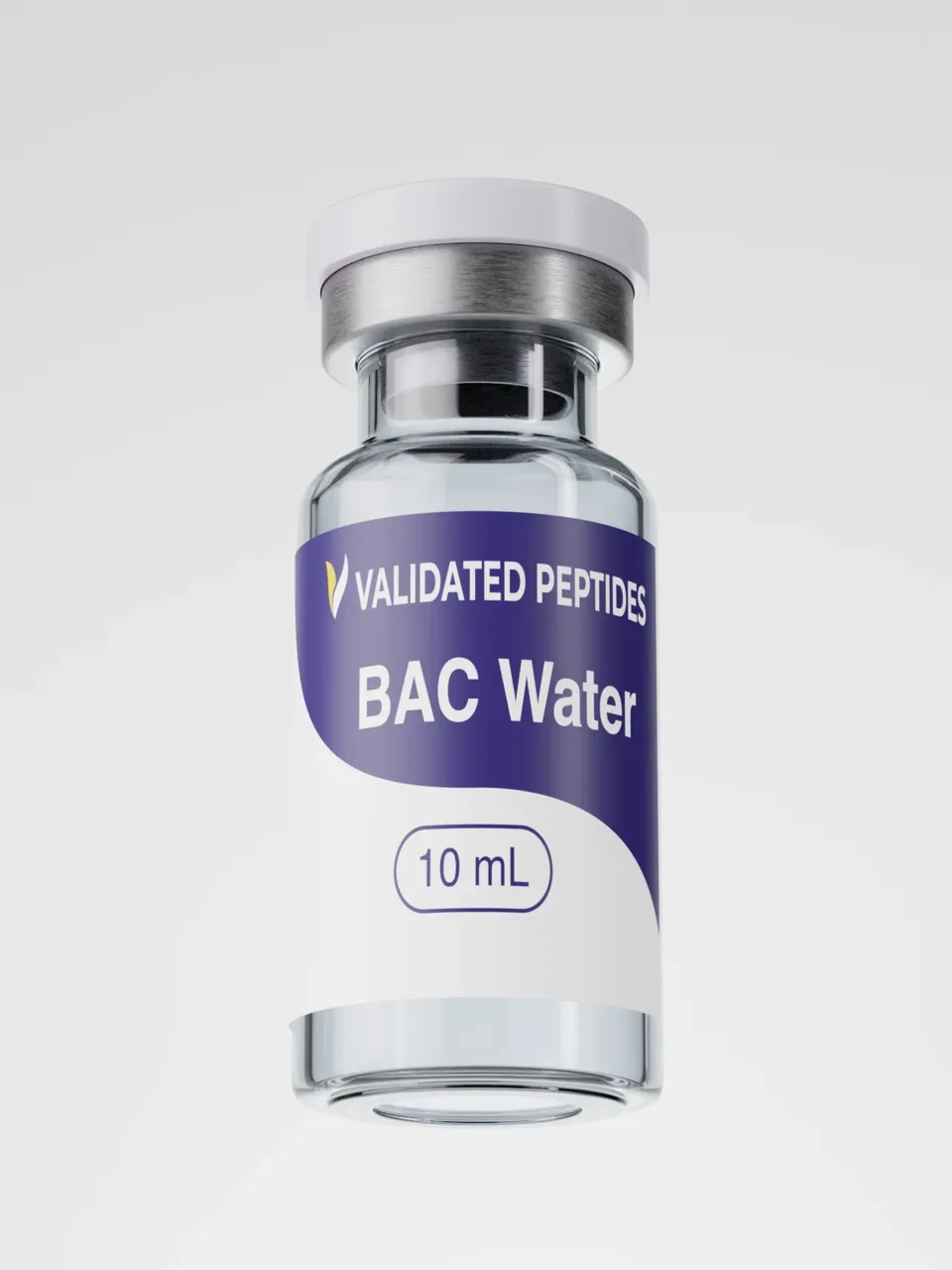
When a protocol calls for the peptide in solution, it is dissolved in sterile water or bacteriostatic water. Bacteriostatic water contains a preservative and suits work where the same vial is accessed more than once.
Where GLP-3Reta Sits in Metabolic Signalling Research
GLP-3Reta is a defined tool for one question: what changes when the GIP, GLP-1 and glucagon pathways are engaged by a single molecule instead of one or two at a time. Its research value rests on that three-receptor design, on the structural modifications that keep it stable in experimental systems, and on lot documentation that confirms the molecule in the vial is the one described.
As comparative work on single, dual and triple receptor activation continues, triple agonists remain a reference point in that series, and GLP-3Reta holds that place in the Validated Peptides catalogue.
Frequently Asked Questions
What is Reta peptide?
Reta is the short name for GLP-3Reta, a 39-amino-acid synthetic research peptide designed to activate three receptors: GIP, GLP-1 and glucagon. Buyers search for it as Reta, Reta peptide, GLP-3 and GLP-3Reta. Validated Peptides sells GLP-3Reta for laboratory research use only, not for human use.
Is GLP-3 a real hormone?
No. The proglucagon family produces glucagon, GLP-1, GLP-2 and oxyntomodulin, but no hormone called GLP-3. In the research peptide market, GLP-3 is shorthand for a peptide built to act on three receptors at once. GLP-3Reta takes its name from that three-receptor design.
What does Reta do?
At the molecular level, GLP-3Reta binds and activates the GIP receptor, the GLP-1 receptor and the glucagon receptor. Researchers use it to study how those three signalling pathways behave when they are engaged together, compared with one or two of them. It is a research compound, not a medicine.
What is the molecular weight of GLP-3Reta?
The published molecular weight of GLP-3Reta is 4,731.33 g/mol, with the formula C221H342N46O68. It is 39 amino acids long and includes two non-standard amino acids, Aib and alpha-methyl-L-leucine, plus a lysine carrying a C20 fatty diacid side chain. Each lot report confirms identity by HPLC.
Why does GLP-3Reta have a fatty acid side chain?
The fatty acid side chain lets the peptide bind to albumin, the main protein in blood plasma. In research on acylated peptides, albumin binding is used to slow clearance so the peptide stays active longer in experimental models. Combined with Aib, it also helps protect the peptide from enzymatic breakdown.
How should GLP-3Reta be stored?
GLP-3Reta should be kept as a lyophilised powder in a cool, dry place away from light, refrigerated at 2 to 8 degrees Celsius. Repeated freeze-thaw cycles should be avoided. Laboratories dissolve it in sterile or bacteriostatic water only when a protocol requires a solution.
References
- Gasbjerg LS, et al. Proglucagon-derived peptides: human physiology and therapeutic potential. Physiological Reviews, 2026;106(1):529-586. https://doi.org/10.1152/physrev.00057.2024
- Holst JJ. The physiology of glucagon-like peptide 1. Physiological Reviews, 2007;87(4):1409-1439. https://doi.org/10.1152/physrev.00034.2006
- Müller TD, et al. Glucose-dependent insulinotropic polypeptide (GIP). Molecular Metabolism, 2025;95:102118. https://doi.org/10.1016/j.molmet.2025.102118
- Finan B, et al. A rationally designed monomeric peptide triagonist corrects obesity and diabetes in rodents. Nature Medicine, 2015;21(1):27-36. https://doi.org/10.1038/nm.3761
- Deacon CF, et al. Dipeptidyl peptidase IV resistant analogues of glucagon-like peptide-1 which have extended metabolic stability and improved biological activity. Diabetologia, 1998;41(3):271-278. https://doi.org/10.1007/s001250050903
- Mu J, Vong E, Carmali S. Artificial lipidation of proteins and peptides: from mechanism to clinical applications. The FEBS Journal, 2026;293(5):1269-1284. https://doi.org/10.1111/febs.70298
- International Organization for Standardization / International Electrotechnical Commission. ISO/IEC 17025:2017, General requirements for the competence of testing and calibration laboratories. https://www.iso.org/standard/66912.html