Third-party tested
Purity documentation available
Research supply chain
Compliance notice included
GLP-1Sema
99%+ Purity

GLP-1Sema

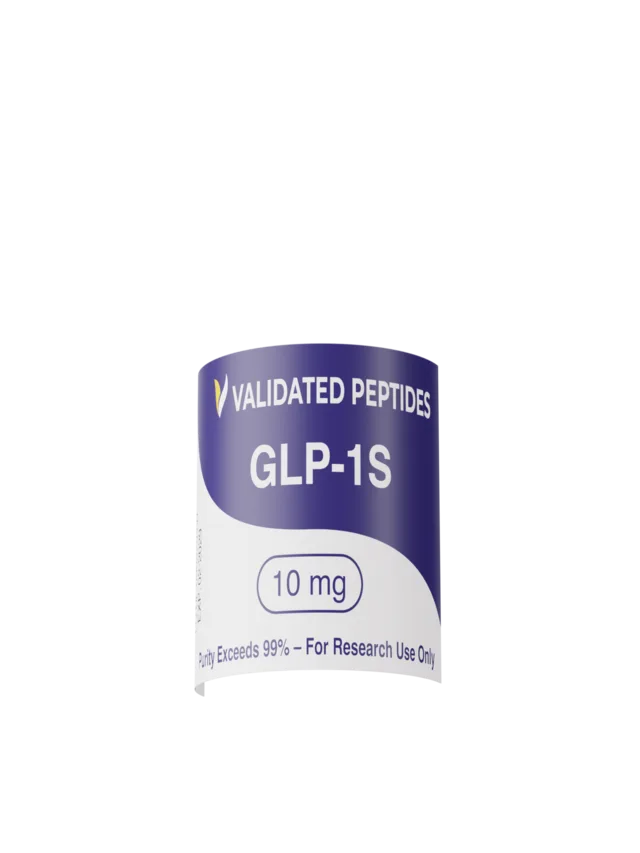
GLP-1S is a 31 amino acid synthetic version of glucagon-like peptide-1, one of the gut hormones that helps coordinate insulin release after eating. It has been chemically modified in two ways: a substitution that protects it from being broken down by an enzyme called DPP-4, and a fatty acid attachment that lets it hitch a ride on albumin in the bloodstream, keeping it active much longer than the natural version. Researchers study it to understand GLP-1 receptor signaling, insulin dynamics, and gastric emptying in laboratory models. For Research Use Only. Not intended for human or veterinary use.

1
$59.99
We accept

Certificate of Analysis

Third Party TestedISO/IEC 17025 Accredited
ISO 170253rd Party
99.8%
Purity
Passed full QC panel
Lot #0003298W
TestedJan 15, 2026
Full QC Panel
Purity (HPLC)99.8%
ISO/IEC 17025 Accredited

Compound Information

Structured specifications and handling data

Molecular profile

Technical specifications

Type:Synthetic Peptide (GLP-1 Agonist)
CAS Number:910463-68-2
Molecular Weight:4113.58 g/mol
Amino Acids:31
Sequence:H-Aib-EGTFTSDVSSYLEGQAAK(γGlu-(AEEA)₂-C18 diacid)EFIAWLVRGRG-OH (31-amino-acid linear peptide based on GLP-1(7-37) with Aib at position 2, Arg at position 28, and Lys20 acylation; full one-letter sequence with modifications refer to structural diagrams in primary literature)
Formula:C187H291N45O59
PubChem Database
Storage requirements

Stability and handling

Lyophilized
Cold Storage
Storage TemperatureStore in a cool, dry place away from light; refrigerate at 2–8°C (36–46°F)
ReconstitutionReconstitute with sterile water or bacteriostatic water
StabilityStable when stored properly; avoid repeated freeze-thaw cycles
Chemical structure

Molecular model

3D Interactive

Loading 3D Molecule...

Left click to rotate • Scroll to zoom

GLP-1Sema research overview

GLP-1S is modeled after GLP-1, a hormone the gut releases when food arrives. Normally, natural GLP-1 gets broken down within minutes by an enzyme called DPP-4. GLP-1S has been engineered with a small amino acid swap at one position that blocks DPP-4 from cutting it apart, plus a fatty acid chain that lets it bind reversibly to albumin (a common blood protein). Together, these modifications keep it circulating much longer in experimental models.

When GLP-1S activates the GLP-1 receptor on a cell, it triggers production of cyclic AMP, an internal messenger that kicks off a cascade of downstream signals. In isolated pancreatic cell preparations, researchers have studied how this receptor activation influences insulin release in the presence of glucose. Animal models have been used to study its effects on gastric emptying, which is the rate at which the stomach passes food along to the intestine.

GLP-1S is one of the most heavily published peptides in incretin research, with thousands of papers exploring its pharmacology. Researchers have also used it to study glucose tolerance, insulin sensitivity, and how single-receptor GLP-1 activation compares to the dual and triple-receptor approaches seen in peptides like GLP-2T and GLP-3R. For Research Use Only. Not intended for human or veterinary use.

Receptor Activation Studies

Has been investigated for GLP-1 receptor binding and cyclic AMP signaling in cell-based assays.

Feeding Studies

Animal research has explored associations with food intake and satiety signaling in experimental models.

Gastric Function Research

Studies have examined effects on gastric emptying rates using pharmacological marker methods.

Metabolic Research

Research has investigated body weight changes and glucose homeostasis in animal metabolic models.

Research evidence

Published studies and concise summaries for research review.

Research Paper
Lorem ipsum dolor sit amet, consectetur adipiscing elit. Sed do eiusmod tempor incididunt ut labore et dolore magna aliqua.
Ut enim ad minim veniam, quis nostrud exercitation ullamco laboris nisi ut aliquip ex ea commodo consequat.
GLP-1S and Cardiovascular Outcomes in Patients with Type 2 Diabetes
Marso SP et al.
Research Paper
Lorem ipsum dolor sit amet, consectetur adipiscing elit. Sed do eiusmod tempor incididunt ut labore et dolore magna aliqua.
Ut enim ad minim veniam, quis nostrud exercitation ullamco laboris nisi ut aliquip ex ea commodo consequat.

AI-generated summary of this research paper below.

The SUSTAIN-6 trial was a randomized, double-blind, placebo-controlled noninferiority study evaluating once-weekly subcutaneous GLP-1S (0.5 mg or 1.0 mg) versus placebo in 3297 adults with type 2 diabetes at high cardiovascular risk over a median 2.1 years. GLP-1S significantly reduced the primary composite outcome of cardiovascular death, nonfatal myocardial infarction, or nonfatal stroke (6.6% vs 8.9%; hazard ratio 0.74; 95% CI 0.58-0.95; P<0.001 for noninferiority and superiority), driven mainly by a 39% lower rate of nonfatal stroke. Glycemic control was superior (HbA1c reduction ~1.0-1.5%), with additional benefits in body weight loss (~4-5 kg) and fewer new/worsening nephropathy events, though diabetic retinopathy complications increased early (likely due to rapid HbA1c drop). Gastrointestinal side effects were more frequent but mild-moderate. This trial established GLP-1S's cardiovascular safety and superiority, influencing guidelines to prioritize GLP-1 agonists for high-risk type 2 diabetes patients.
Research overview
Total Papers
3,800+
Year Range
1994+
Research status
Active
Peer-reviewed studies available
Research FAQ

Frequently asked questions

Concise answers about laboratory context, handling, and documentation for this compound.

Laboratory compliance notice

All compounds sold by Validated Peptides are intended for in-vitro laboratory research only.

These materials are not approved by the FDA for human or animal use and are not intended for diagnostic, therapeutic, or clinical applications.

Purchasers are responsible for compliant handling, storage, and use within an appropriate laboratory environment.

Research Use Only
Not for Human Use
21+ Required