



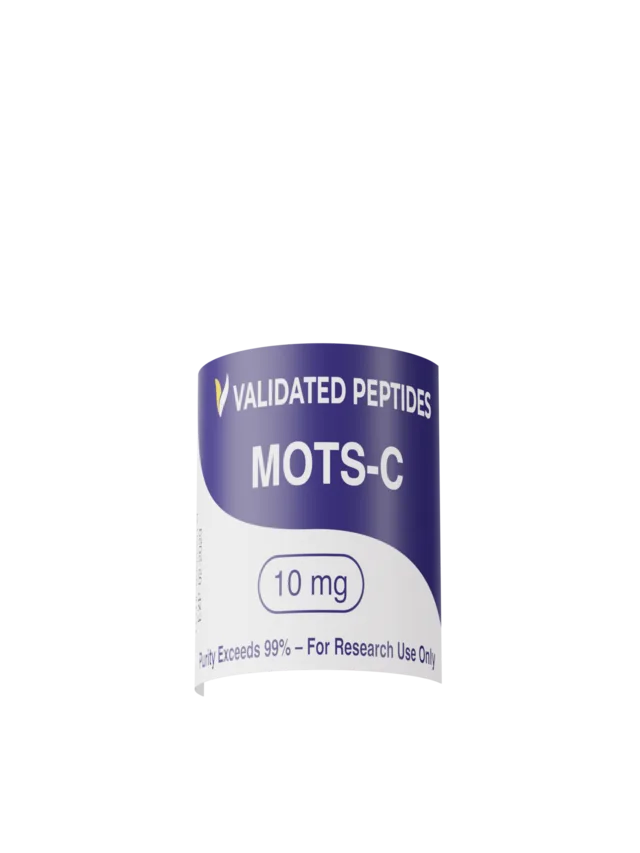

MOTS-C is a mitochondrial-derived peptide composed of 16 amino acids encoded by the 12S rRNA region of the mitochondrial genome. Research demonstrates MOTS-C significantly enhances exercise performance, improves insulin sensitivity, and promotes metabolic homeostasis. In animal studies, MOTS-C has been shown to prevent diet-induced obesity, reduce fat accumulation, increase skeletal muscle glucose metabolism, and improve physical capacity in aging subjects. The peptide translocates to the nucleus during metabolic stress to regulate gene expression through AMPK pathway activation. Studies indicate MOTS-C increases exercise endurance by 12-15%, prevents muscle atrophy, and enhances mitochondrial function in skeletal muscle tissue.
Structured specifications and handling data
Technical specifications
Met-Arg-Trp-Gln-Glu-Met-Gly-Tyr-Ile-Phe-Tyr-Pro-Arg-Lys-Leu-ArgC101H152N28O22S2Stability and handling
Molecular model
Loading 3D Molecule...
Compounds commonly studied alongside this one.

Most peptides researchers study are encoded by nuclear DNA. MOTS-C is different. It comes from a small coding region hidden inside the mitochondrial genome, specifically within the 12S ribosomal RNA gene. Mitochondria are the organelles that generate most of a cell's energy, and for a long time scientists thought mitochondrial DNA only coded for components of the energy production machinery itself. The discovery that mitochondria also produce signaling peptides like MOTS-C opened up a new area of research into how these organelles communicate with the rest of the cell.
In cell culture experiments, MOTS-C appears to activate AMPK (AMP-activated protein kinase), which is often called the cell's energy sensor. When a cell is low on fuel, AMPK flips on pathways that generate energy and turns off ones that consume it. Researchers have also found that under metabolic stress, MOTS-C can travel into the cell nucleus and interact directly with DNA at regulatory regions tied to antioxidant defense and metabolic gene activity. It has also been linked to one-carbon metabolism, the biochemical cycle cells use to build DNA building blocks and process folate.
Animal research has explored MOTS-C in models studying glucose uptake, fat burning, and insulin sensitivity. Scientists have also measured natural MOTS-C levels across different ages in animal models, noting that levels appear to change with age. That age-related connection is one reason it has become a popular subject in metabolism and aging research.
Published studies and concise summaries for research review.
AI-generated summary of this research paper below.
Concise answers about laboratory context, handling, and documentation for this compound.
Laboratory compliance notice
All compounds sold by Validated Peptides are intended for in-vitro laboratory research only.
These materials are not approved by the FDA for human or animal use and are not intended for diagnostic, therapeutic, or clinical applications.
Purchasers are responsible for compliant handling, storage, and use within an appropriate laboratory environment.